Is my tank’s TÜV valid? – Recognising a valid tank inspection
You want to fill but aren’t sure whether the inspection stamp on your dive tank is still valid? Here you can see what a valid inspection stamp looks like and what to look out for.
Where is the stamp?
The inspection stamp is usually punched directly into the metal on the shoulder or neck of the tank. The paint is often removed at this point so that the stamping is visible. Some companies add a tag or sticker – but what counts is the punched stamp or the stamped date.
What a valid stamp looks like
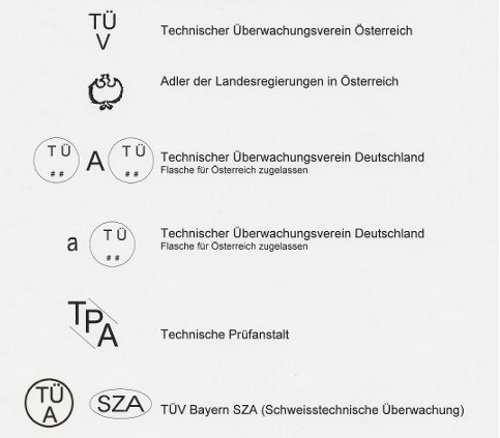
An inspection stamp typically contains the date of the last inspection (month/year – less often the due date directly), the mark of the inspection body and – usually in Germany – a code for the type of inspection. How long the inspection is valid for is given by this date plus the inspection interval that applies in your country. The following diagram shows the layout (real stamps vary by country, inspection body and year of manufacture):
Your checklist before filling
- An inspection stamp/date is present and easy to read.
- The inspection is still valid: the stamp usually shows the month/year of the last inspection – add the inspection interval that applies in your country (some stamps show the due date directly). If the due date is in the past: don’t fill.
- An inspection body mark is visible (in Germany usually with the code I or F).
- The pressure markings are right: working pressure (PS, on older tanks PW/WP) and test pressure (PT, on older tanks PH/TP) are stamped on.
- No visible damage (dents, corrosion, heat exposure) on the tank.
If any of these features is missing or you’re unsure – don’t fill.
Tip: enter your tanks’ due dates in the dashboard under “My tanks” – we’ll remind you from 6 months before expiry, and tanks with an expired inspection are blocked for filling.
Inspection intervals by country
The intervals differ – check the rules for your country. By the way, in Switzerland it’s not called “TÜV” but SVTI/EGI.
| Country | Visual/internal inspection | Hydrostatic/strength test | Inspection body |
|---|---|---|---|
| Austria | in the 4th & 7th year (internal + external, without hydrostatic test) | every 10 years | accredited body / TÜV Austria |
| Germany | every 2.5 years | every 5 years | ZÜS (TÜV, DEKRA …) |
| Switzerland | every 2.5 years | every 5 years | EGI / SVTI |
Composite (carbon fibre) tanks often have shorter intervals (usually 5 years) and a limited service life – follow the manufacturer’s instructions.
This page is intended for guidance only and is not legal or expert advice. Inspection stamps vary by country, inspection body and year of manufacture. If in doubt, the responsible accredited inspection body or the manufacturer decides. Sources include: Versandbehälterverordnung 2011 § 5 (4)–(5) (AT, RIS), Swiss Safety Center / SVTI Group (CH: periodic inspection every 5 years, with a visual inspection after 2.5 years in between), taucher.net, falle.at, dangerous goods regulations (ADR/RID, BetrSichV). As of: November 2026.